

Demystifying "hip openers"
What exactly are we trying to open?
We’ve all heard the phrase thousands of times.
“Today we’re going to focus on hip openers.”
It’s one of the most common expressions in modern yoga. Yet we rarely stop to ask what exactly we’re trying to open.
The hip joint? The muscles around it? The joint capsule? Something else entirely?
The phrase is so familiar that it often escapes scrutiny. Yet it raises an interesting question about how we think and talk about movement.
[Premium members - click the play button above the introduction to listen to the audio version of the newsletter and make sure you scroll all the way to the end to download your exclusive printable Quick Reference teaching guide on demystifying hip openers.]
Three ways to continue learning with me, when you’re ready:
1. Study live online
Join me for an upcoming live training, from my Teaching with Confidence series in September to my Anatomy Applied to Yoga 6-Week Course beginning in October. Evidence-based education designed to help you teach with greater clarity and confidence. Reserve your place.
EARLY BIRD PRICING FOR THE SEPT AND OCT COURSES ENDS JUNE 30TH!
2. Join the Enlightened Yoga Collective
Enjoy a free 1-week trial of my online membership for yoga teachers. Explore on-demand lessons, practical resources, and a supportive community to help you teach with confidence. Start your free trial.
3. Learn through my books
Explore The Physiology of Yoga and Supporting Yoga Students with Common Injuries and Conditions for practical, evidence-based guidance you can return to again and again. Discover the books.
👉What is a hip opener?
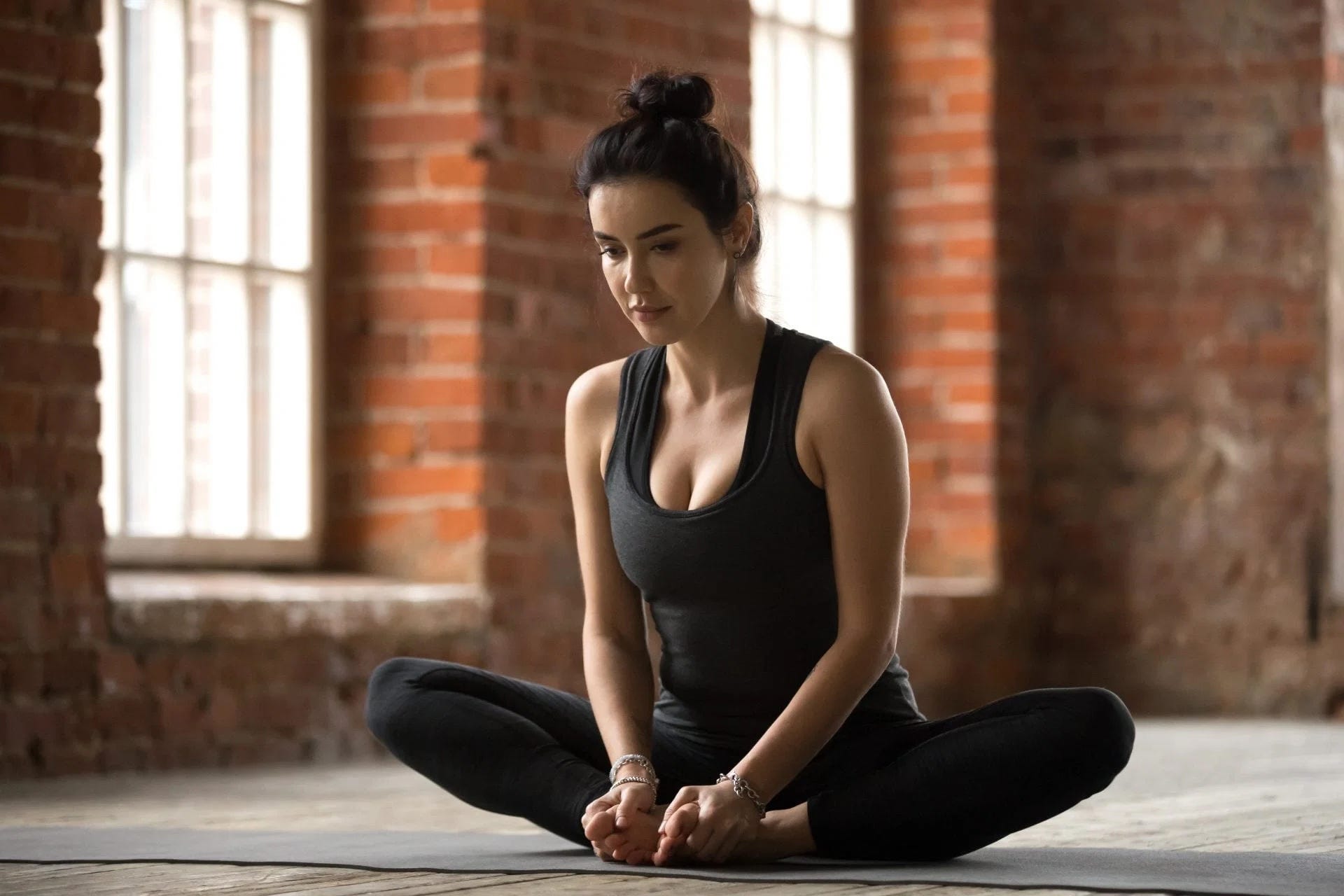
When most teachers refer to hip openers, they are usually talking about poses that involve a significant amount of external rotation at the hip joint.
Think of movements such as Baddha Konasana, Sukhasana, Pigeon Pose, or Warrior II. In each case, the thigh bone rotates outward relative to the pelvis.
The interesting thing is that external rotation is only one of several movements available at the hip. The hip joint can also flex, extend, abduct, adduct, and internally rotate.
How did one movement become so strongly associated with the idea of “opening” the hips that we rarely question the phrase at all?

👉A question of language
The term hip opener can be useful shorthand, but it may also subtly shape how students think about their bodies.
If external rotation is described as opening the hips, students may assume that this is the movement they need more of, that deeper is better, or that restricted external rotation is a problem to be solved.
None of these assumptions are necessarily true.
Some students may have plenty of external rotation already. Others may benefit more from strength, control, balance, or exploring movements that receive far less attention in many yoga classes.
Many of the assumptions that become embedded in yoga culture begin with the language we use.
👉The forgotten movement
One movement that is often underrepresented in yoga practice is internal rotation of the hip.
While many sequences repeatedly explore external rotation, opportunities to actively develop internal rotation are often less common.
Yet internal rotation is a normal part of healthy hip function and contributes to activities such as walking, running, changing direction, and moving efficiently through daily life (Neumann, 2017).
If we truly want adaptable hips, it may be worth exploring movement in all directions rather than focusing primarily on one.
In fact, active internal rotation is something I often find missing from many asana sequences. If you’d like to explore this often-overlooked movement, I’ve recorded a short, accessible practice focused on developing active internal rotation at the hip joints. Just click the image below to watch the short practice:

👉Why this matters for yoga teachers
Language matters.
The words we use influence how students understand their bodies and their practice.
There is nothing inherently wrong with the term hip opener. Most students know exactly what we mean when we use it.
At the same time, it can be helpful to remember that healthy movement is not simply about acquiring more range of motion in one direction. It also involves strength, coordination, confidence, and the ability to move in a variety of ways.
Perhaps the goal is not to create ever more “open” hips.
Perhaps it is to cultivate more capable and adaptable ones.
👉In summary
Hip opener has become one of yoga’s most popular phrases, yet it often refers to just one movement, external rotation of the hip.
While these poses can be valuable, they represent only one part of what the hips are capable of doing.
As teachers, we might occasionally ask a different question.
Instead of focusing on how to open the hips, how can we help students explore the full range of possibilities that their hips have to offer?
Can I ask you a quick favour? If you enjoyed this post, please tap the heart at the bottom of the email. This helps my writing reach more people.
Upcoming Workshop: Demystifying Aging, July 1st
How bodies, brains, and beliefs change with age
I’m excited to be teaching a new evidence-based workshop designed specifically for yoga teachers who want a clearer, more nuanced understanding of aging bodies and brains.
Together we’ll explore:
What actually changes with age
What remains adaptable
Common myths around aging and movement
Strength, balance, mobility, and cognition
How beliefs influence capacity
Practical teaching implications for yoga classes
This workshop is designed to help teachers move beyond fear-based narratives and teach aging bodies with more confidence, clarity, and evidence-informed understanding.

References:
Kapandji, I. A. (2019). The Physiology of the Joints, Volume 2: The Lower Limb (7th ed.). Handspring Publishing.
Neumann, D. A. (2017). Kinesiology of the Musculoskeletal System: Foundations for Rehabilitation (3rd ed.). Elsevier.
