

Half Moon Pose, made accessible
5 ways to teach Ardha Chandrasana for different bodies and contexts.

Each month in the Enlightened Yoga Collective (our online learning platform for yoga teachers) we focus on a different theme or pose to inspire your class planning!
The Monthly Class Inspiration this month is Half Moon Pose!
This week I’m giving you access to features that are normally reserved for premium members only.
Click above to listen to the audio version, where I read this issue aloud.
Download the printable Quick Reference Teaching Guide for Half Moon Pose at the end of the article.
Interested in becoming a premium member?
Three ways to train with me, when you’re ready…
Join the Enlightened Yoga Collective:
Free 1-week trial. On-demand, teacher-focused lessons and a supportive community to help you plan and teach with confidence. Start your free trial.
Study live online:
Join me for a live training, from my Demystifying Aging workshop in July, to the Teaching with Confidence series in September, and my Anatomy Applied to Yoga 6-Week Course starting in October. All designed to support clearer, more confident, evidence-based teaching. Reserve your spot today.Train in person:
I’ll be running trainings in Zürich, Yorkshire and Cheltenham in June. Interactive, evidence-based workshops designed to help you teach with clarity and confidence. Book your place (spots limited).
As yoga teachers, we often ask students to coordinate multiple actions at once. Balance, strength, orientation in space, and attention can all come together in a single pose.
Half Moon Pose (Ardha Chandrasana) is a great example. It asks for single-leg balance, weight-bearing through one arm, specific hip positioning, and spinal rotation, all while maintaining steady breathing.
For many students, that combination can feel overwhelming. The good news is that the pose is highly adaptable.
👉What is Half Moon Pose asking for?
Rather than thinking of Half Moon as a fixed shape, it can be helpful to break it down into broad components:
Balancing on one leg (or reducing the balance demand)
Supporting some weight through the upper body
Lifting the free leg away from the floor
Orienting the torso in a rotated position
These elements can be scaled up or down depending on the student.
👉What does the research say?
Balance is a trainable skill, influenced by strength, proprioception, and task familiarity (Shumway-Cook and Woollacott, 2017). It is also highly context-specific, meaning that practising variations can be just as valuable as practising the pose in its more traditional form.
There is also good evidence that strength training, including single-leg work, supports joint health and resilience across the lifespan (ACSM, 2021).
From this perspective, Half Moon is less about achieving a final shape and more about exposing students to useful physical challenges in an appropriate way.
👉What might be happening instead?
When students struggle with Half Moon, it is rarely just about “tightness” or “lack of flexibility”.
More often, the limiting factors include:
Balance confidence
Strength in the standing leg or hip
Coordination of multiple actions
Unfamiliarity with the task
This is where thoughtful variation becomes essential.
👉5 Ways to Teach Half Moon Pose:
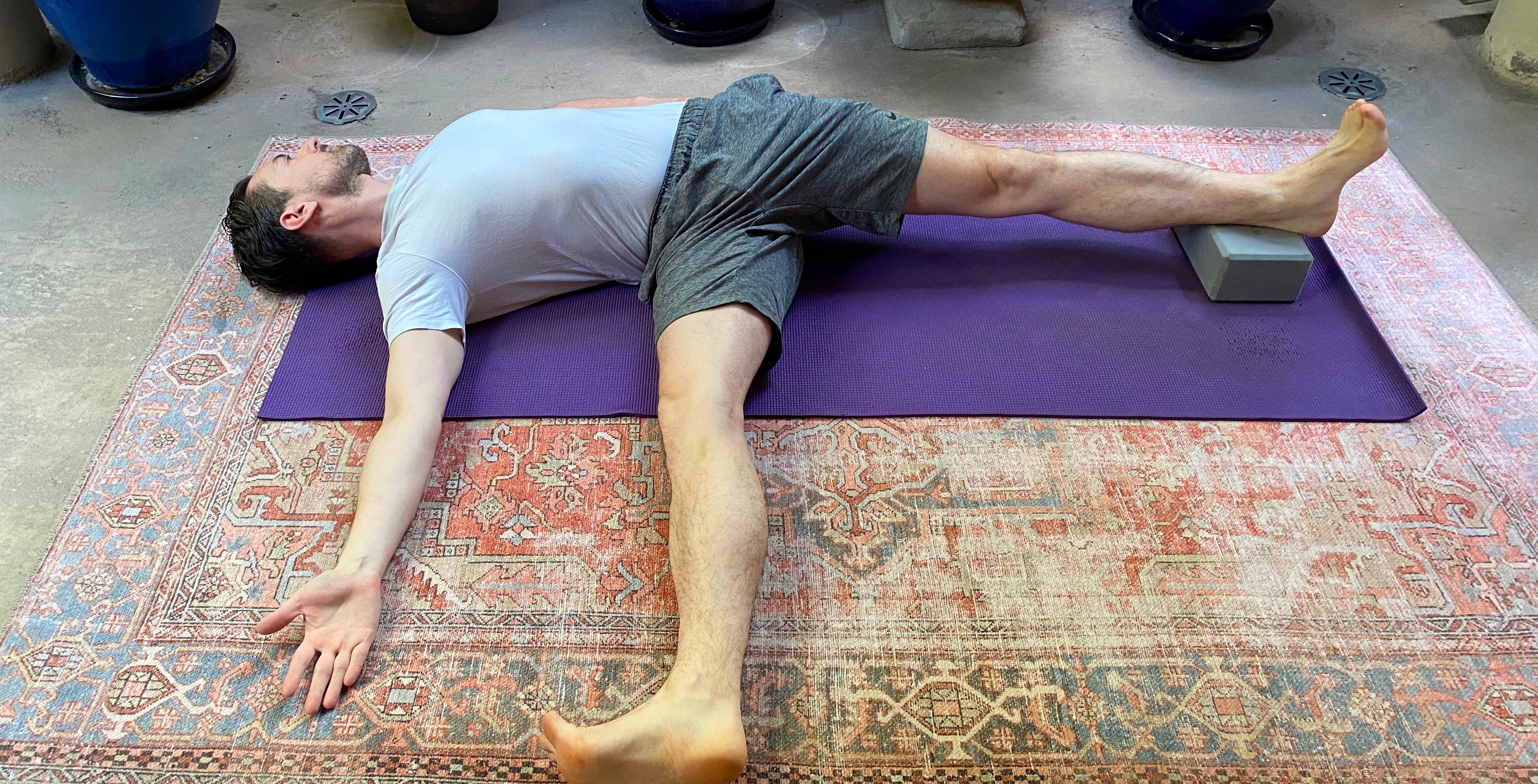
1. Supine Half Moon
This is the most accessible version, as it removes the challenge of balance entirely.
Lying on the side provides full support from the floor
Students can explore hip rotation and leg positioning without fear of falling
It is particularly useful for those with balance concerns or lower limb injuries
This variation allows students to understand the shape without the pressure of holding themselves up. You can also encourage students to visualise themselves balancing here.
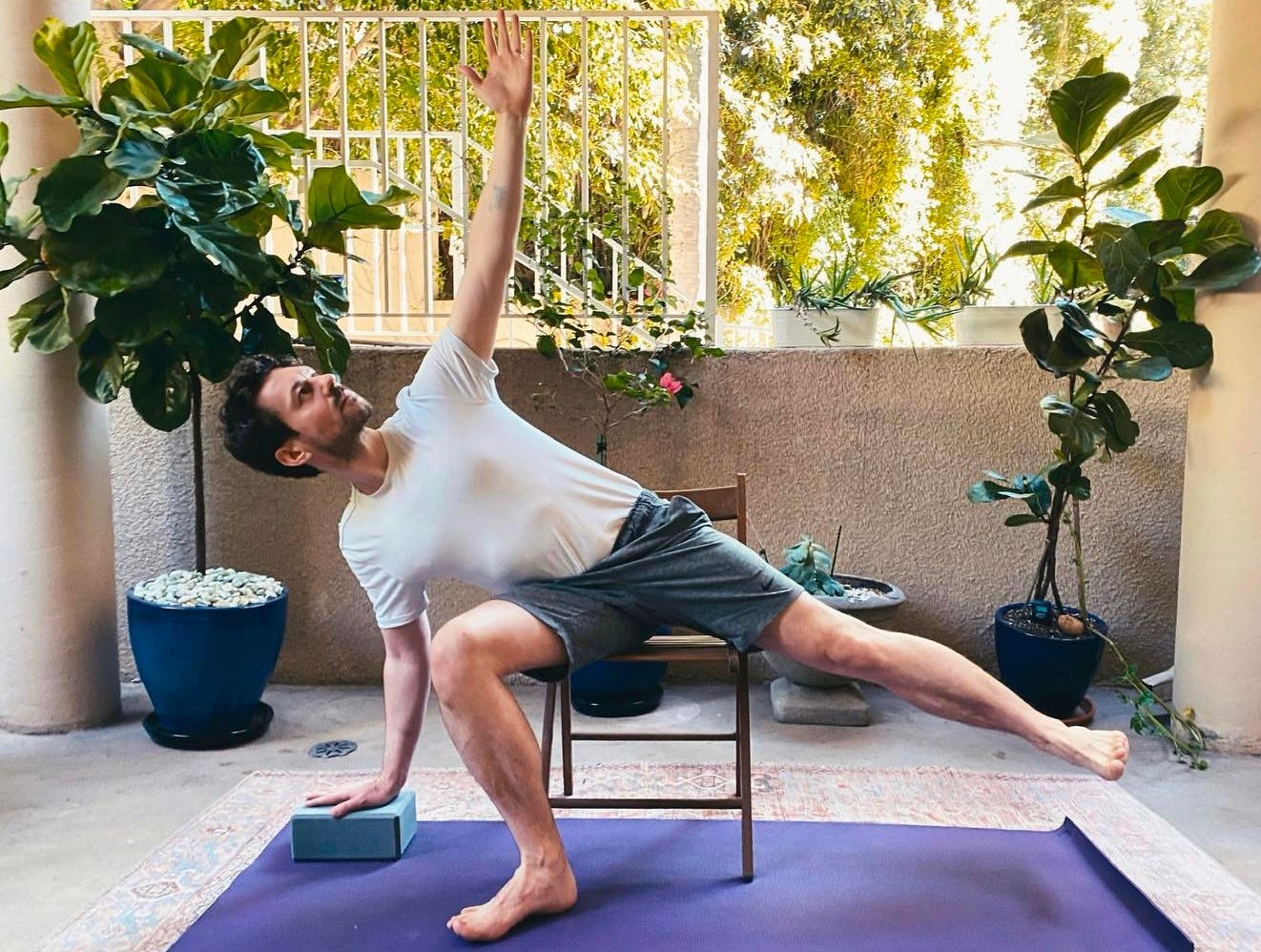
2. Seated Half Moon
Here, the chair provides a stable base while reintroducing some coordination.
The torso is upright, but balance demands remain low
Students can explore lateral movement and rotation
Useful for those who find transitions to and from the floor challenging
This is a great bridge between fully supported and partially weight-bearing variations.
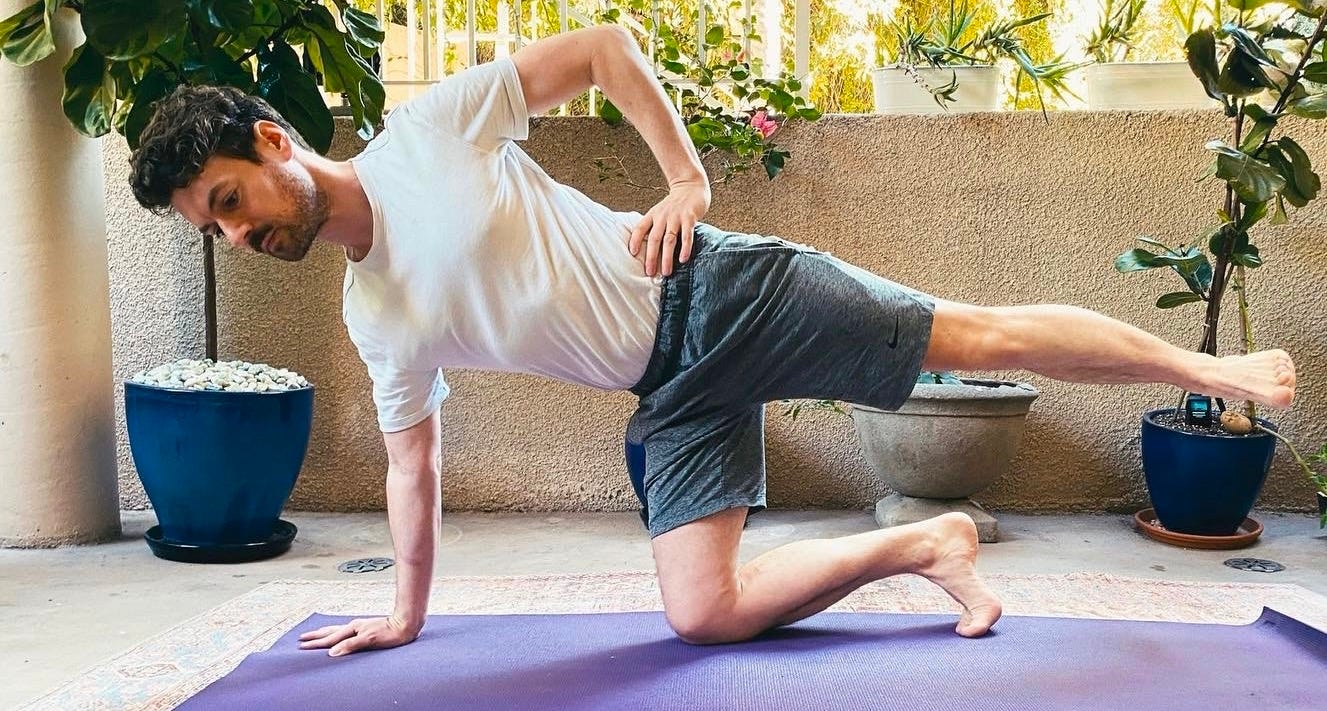
3. Kneeling Half Moon
This version reduces the demand on the standing leg.
One knee remains on the floor, providing stability
Balance is still present, but significantly reduced
Suitable for students managing foot or ankle issues
It allows students to build confidence with the upper body and lifted leg.
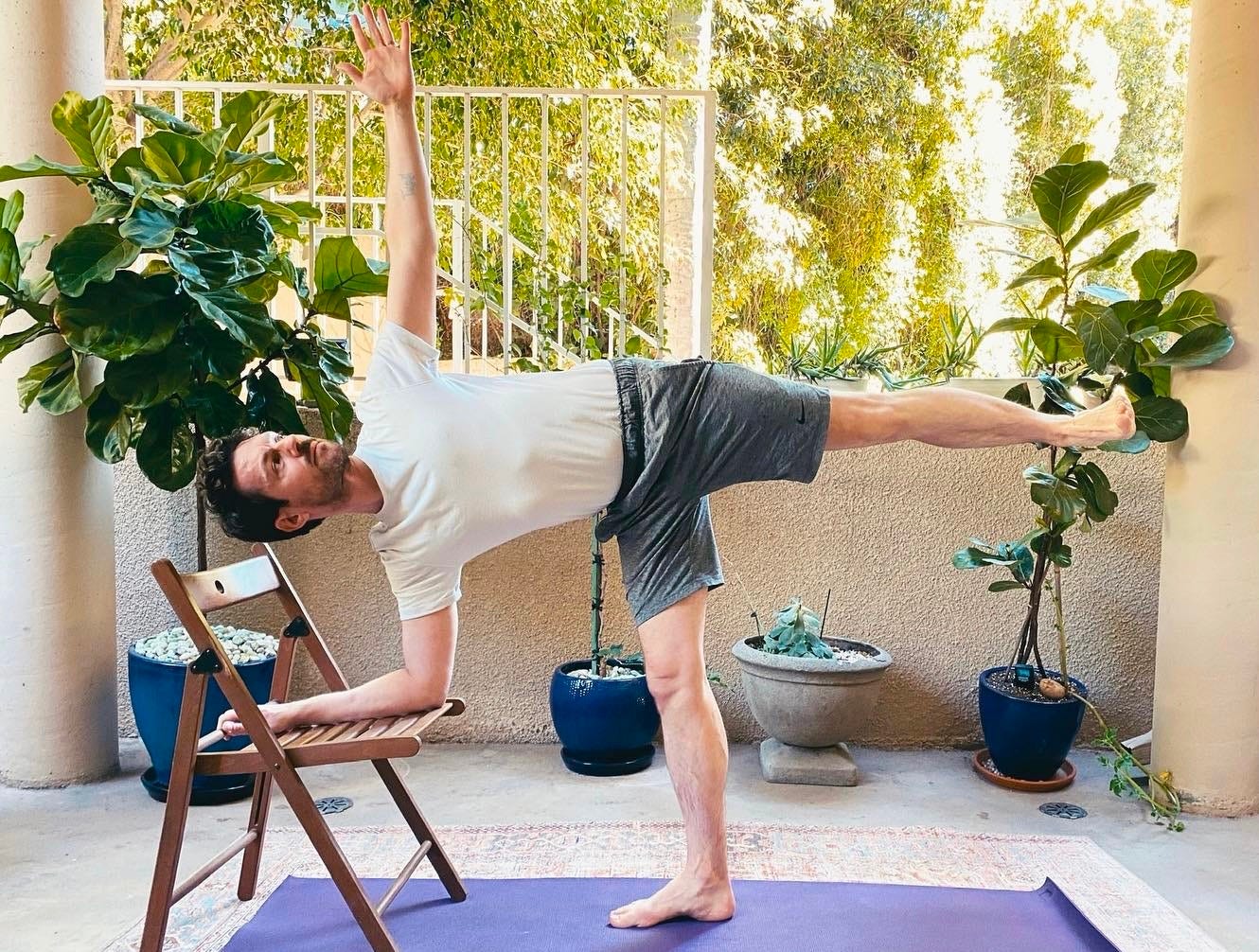
4. Half Moon with a Chair
Now we increase the challenge slightly while still offering strong support.
The chair supports the upper body
The standing leg becomes more active
Balance demands are moderate, but manageable
This is particularly helpful for students who feel unsteady but want to work towards the traditional version of the pose.
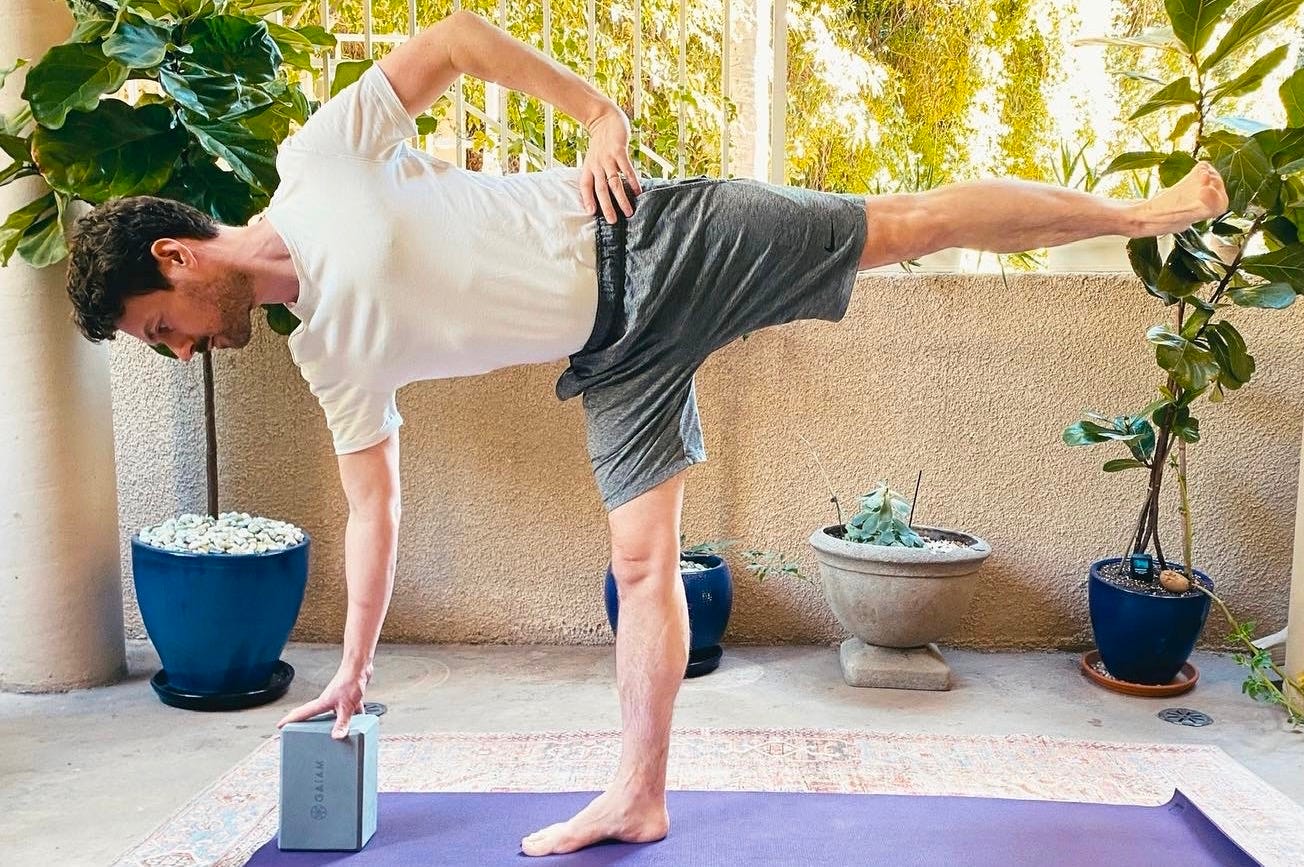
5. Half Moon with a Block
This is closest to the traditional version.
The block reduces the range required to reach the floor
Balance and strength demands are higher
Suitable for students who are comfortable with single-leg work
At this stage, students are integrating multiple elements of the pose.
👉Why this matters for yoga teachers
Teaching a single “ideal” version of a pose can unintentionally exclude students.
By offering variations, you:
Meet students where they are
Reduce fear and increase confidence
Encourage exploration rather than performance
Support long-term engagement with practice
Accessibility is not about making things easier, it is about making them appropriate.
👉Practical takeaways
Think in components, not poses
Reduce one demand at a time, for example balance or load
Use props and positioning to support success
Offer multiple entry points in your classes
Encourage curiosity over perfection
References:
American College of Sports Medicine (2021). ACSM’s Guidelines for Exercise Testing and Prescription.
Shumway-Cook, A. and Woollacott, M. (2017). Motor Control: Translating Research into Clinical Practice.
P.S. If this week’s topic resonated with you, here is a great way to dive deeper:
→ The Enlightened Yoga Collective supports inclusive, accessible teaching. The Monthly Class Inspiration this month is Half Moon Pose!
We’ll be including:
✨A pdf breaking down these 5 variations
✨A full yoga practice for you to steal or adapt!
Premium member bonus - download the printable Quick Reference Teaching Guide on Half Moon Pose variations here:

Enjoyed this newsletter or have a question? Comment below!
See you next week!
I love inviting students to take this pose at the wall, too.