

Teaching the nervous system without overreach
What a new critique of Polyvagal Theory can teach us about confidence, precision, and integrity in the yoga room.

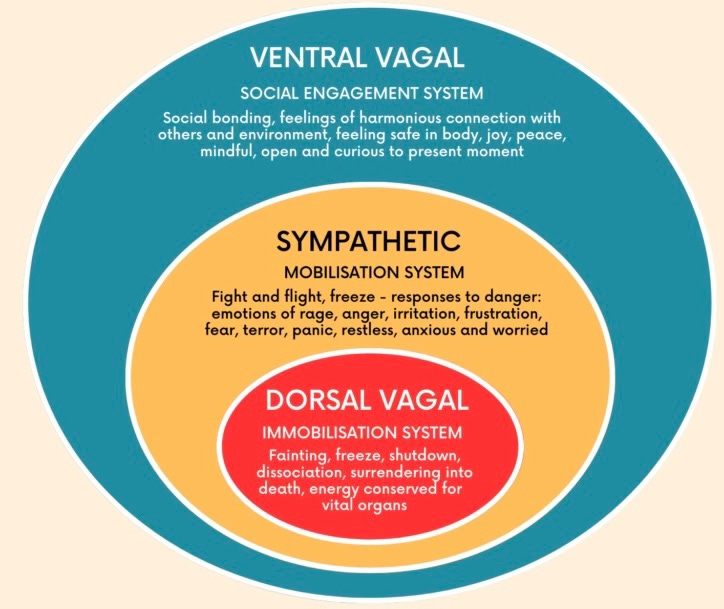
You have probably heard that we have a “social nervous system”, a “fight or flight system”, and a “shutdown system”. This story comes from something called Polyvagal Theory.
In 2026, a large group of international scientists argued that the core science behind that story may not hold up. Let’s unpack this.
[Premium members - click the play button above the introduction to listen to the audio version of the newsletter and make sure you scroll all the way to the end to download your exclusive printable Quick Reference teaching guide on teaching the nervous system without overreach.]
Ready to deepen your applied anatomy knowledge and become more confident in your teaching?
Join me for an in-person training this year and learn in a supportive environment.

👉First, what is Polyvagal Theory in simple terms?
Polyvagal Theory suggests that when we feel safe, a particular branch of the vagus nerve supports connection, calm breathing, facial expression, and social engagement. When we feel threatened, we shift into fight or flight. And when threat feels overwhelming, we drop into shutdown or collapse. Many people describe this as an “autonomic ladder”.
It is tidy, memorable, and compassionate. That is one reason it has spread so rapidly through trauma therapy, yoga, breathwork, and coaching.
👉What are scientists now challenging?
In 2026, Paul Grossman and 38 colleagues published a detailed scientific review arguing that the biological claims behind this model are not well supported by the evidence. Their concerns are not philosophical. They are physiological.
They focus on three main areas:
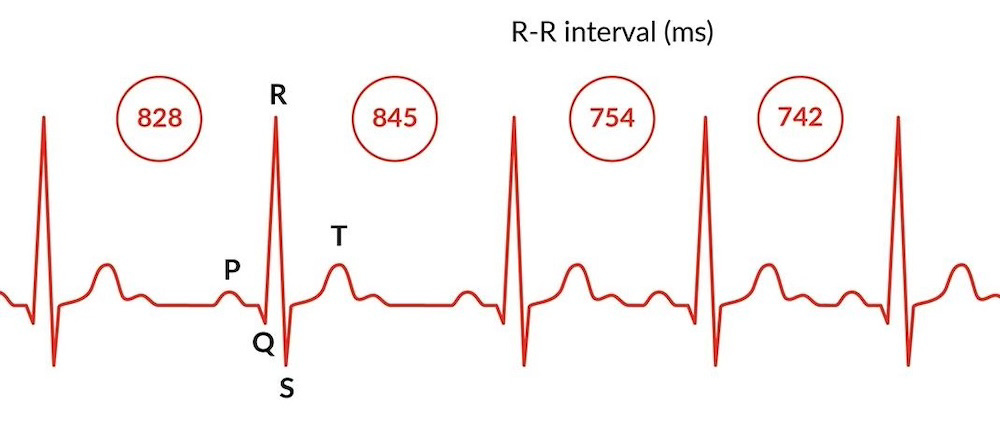
First, heart rate variability, the natural variation in time between heartbeats, is often presented as a direct measure of safety or vagus nerve activity. The reviewers argue that this is too simplistic. Heart rhythm changes for many reasons, especially breathing mechanics. If you slow your breathing, your heart rhythm will change. That does not automatically mean your brain has shifted into a specific “safety circuit”. This matters in yoga because we deliberately change breathing patterns.
Second, Polyvagal Theory proposes that a specific branch of the vagus nerve causes freeze, dissociation, or collapse states. The reviewers argue that there is no strong human evidence that this pathway functions in the way the theory claims. In other words, the neat three-level ladder may not map cleanly onto real anatomy.
Third, the evolutionary story may be overstated. The theory suggests that mammals evolved a unique nerve pathway that made social connection possible. The reviewers point out that many non-mammal species display complex social behaviour and share similar nerve structures. The idea that social connection is a uniquely mammalian vagus innovation may simply be too bold.

👉Is this a takedown of everything?
Not quite.
Importantly, the critique is not saying that safety does not matter, that stress does not change physiology, that breathing does not influence heart rhythm, or that connection does not support regulation. All of those principles remain well supported.
The debate is about whether the specific anatomical and evolutionary claims of Polyvagal Theory are accurate.
Stephen Porges, who developed the theory, has published a formal response arguing that the critics misunderstand and oversimplify his work. So, this is not a settled model collapsing overnight. It is an active scientific debate.
👉What does this mean for yoga teachers?
Here is the key point: you do not need Polyvagal Theory to justify what works in yoga.
Slow breathing shifts physiology. Gradual movement builds tolerance. Predictability increases perceived safety. Connection changes how people feel in their bodies. These principles stand on solid ground.
What may need softening is the very specific claim that one exact nerve pathway is responsible for one exact psychological experience.

👉How I would update our language
Instead of saying, “This activates your ventral vagal system,” we might say, “This kind of breathing often supports a more flexible and settled state.”
Instead of saying, “You are in dorsal vagal shutdown,” we might say, “Sometimes when stress feels overwhelming, the body shifts into a low-energy protective pattern.”
The compassion remains the same; the certainty about specific nerve pathways softens.
👉Why this matters
Yoga teachers hold authority in the room. When we speak about anatomy and physiology, we shape how students understand their bodies. It is entirely appropriate to use helpful metaphors. It is not appropriate to present contested biology as settled fact.
If a model survives critique, it strengthens. If parts of it fall away, we refine. Either way, our job stays the same: help people move, help people breathe, and help people feel safer in their own bodies, without exaggeration.
Three ways to train with me, when you’re ready…
Study live online:
My new Anatomy Applied to Yoga 6-Week Course starts Apr 21st. Evidence-based training to deepen your understanding of how yoga affects the body. Reserve your spot today.
Train in person:
UK (Mar/Apr), US East Coast (May), UK & Europe (June). Interactive, evidence-based workshops designed to help you teach with clarity and confidence. Book your place (spots limited).
Join the Enlightened Yoga Collective:
Free 1-week trial. On-demand, teacher-focused lessons and a supportive community to help you plan and teach with confidence. Start your free trial.

